
Using an AI social media post generator: packs, carousels and one image for every platform
The showcase contains seventeen real sessions that fit an AI social media post generator, and they fall into three shapes. Brand packs are four square posts for an invented brand, each with a different purpose. Carousels are four portrait slides that must look like one document. The newest sessions are single covers and single images recomposed for different platforms. Below is what each kind of brief asked for, which image model made it, and where the agent reported something that did not go to plan.
All the brands, handles and people in these sessions are invented, and the briefs were written by showcase authors. Read what follows as a record of what these briefs did, not as a rule for every brief.
Brand packs: a system first, then exact copy
The “DAYBREAK”, “VERDE”, “PULSE” and “FABLE” replays are all four-post Instagram packs for fictional brands, a wellness tea, a plant shop, a fitness studio and a bookshop cafe. Each brief defines the brand system before any post: a palette, a type style and a small logomark. Each then assigns the four posts a purpose, such as a quote, a product or new arrival, a tip or event card, and a promo, and quotes the words that must appear, for example a handle, a headline and a sale line. All four are square 1:1 and were generated independently with GPT Image 2.
Language is a repeated instruction. Every brief says the on-image text must be English in Latin script, and DAYBREAK repeats it several times and names Chinese characters as the thing to avoid. DAYBREAK’s message lists each post’s exact words, while the VERDE and PULSE messages describe the sets in general terms and say nothing about the text, and the FABLE message mentions clean English text without saying each word was checked.
Carousels: four slides, one design system
“Brew Better Coffee” and “Houseplant Care 101” define a design system in a sentence, a cream background, ink colours, a serif and sans pairing, a thin underline accent and page marks like 1/4, then give each slide its heading, short line and illustration. Both ask for 4:5 portrait and were generated as four parallel pictures. The replay lists the fourth Houseplant slide at 1003 by 1568 pixels while the other three are 1122 by 1402, even though the agent’s message says all four are unified, so check the ratio of every slide.
“Sleep Better Tonight” and “Design Trends 2026” ask for a different method: make slide 1 first and chain slides 2 to 4 to it as the reference. Sleep Better Tonight did exactly that, one slide at a time, with GPT Image 2. Design Trends 2026 started on Nano Banana and produced all four slides. Then the author reported a typo on slide 3, “Minmalism” instead of “Minimalism”, and asked for only that slide again, using slide 1 as the reference. The agent regenerated it with GPT Image 2, so that replay shows five pictures and two models.
“Weekend in Kyoto” goes the other way. It asks for four different photographs with one colour grade and one lower-left caption style, and tells the agent not to reuse the previous image. The agent made four distinct scenes in parallel.
Single covers and one image for many platforms
The GPT Image 2.5 sessions work one post at a time. In “One image, every platform”, an iced matcha photograph at 4:5 is recomposed three times, each prompt saying to keep the exact subject, never stretch or crop it, and extend the sky and wall. The targets were a 9:16 Story with the top 15% and bottom 25% left clear, a 16:9 X post with the subject in the left third, and a 1:1 square. The agent flagged two side effects of the Story version: the wall edge had to move out of the lower corner, and the glass read slightly larger in the frame.
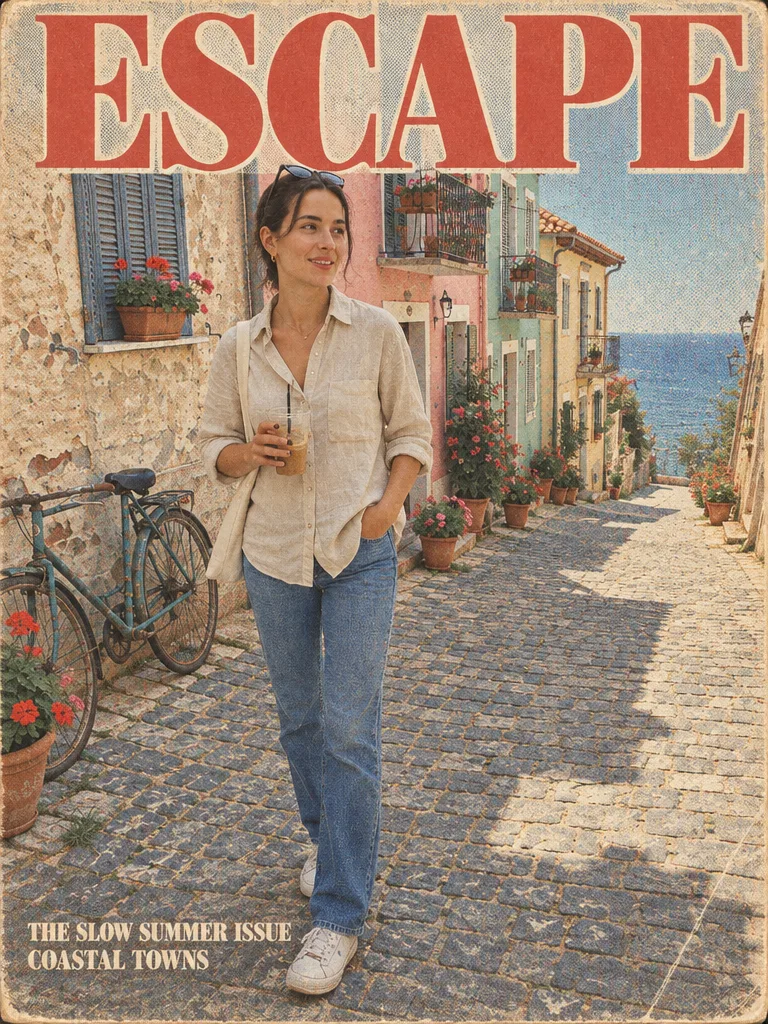
The cover sessions, “Big-type cover”, “Handwritten notes post”, “Magazine collage cover”, “Split comparison post”, “List card post” and “Snapshot caption post”, each make two 3:4 covers from one template with new content. Their prompts share a rule: the quoted text is the only writing anywhere, followed by a list of excluded extras such as usernames, watermarks and platform interface. “Carousel” builds a Fernhollow cover and a matching inside slide, then an Ember & Oak cover and a step slide, each inside slide prompt asking to match the attached cover in colour, typeface and margins. The agent said it checked the lettering of the slides it reported on.
Figures from the sessions
The timed sessions are in the table. The first picture came back between 61 and 190 seconds after the request. The GPT Image 2.5 replays have no recorded timing.
| Replay | Pictures | Model | First picture after (s) |
|---|---|---|---|
| Brew Better Coffee | 4 | GPT Image 2 | 74 |
| DAYBREAK | 4 | GPT Image 2 | 78 |
| VERDE | 4 | GPT Image 2 | 81 |
| Houseplant Care 101 | 4 | GPT Image 2 | 61 |
| PULSE | 4 | GPT Image 2 | 190 |
| FABLE | 4 | GPT Image 2 | 97 |
| Design Trends 2026 | 5 | Nano Banana, GPT Image 2 | 68 |
| Weekend in Kyoto | 4 | GPT Image 2 | 99 |
| Sleep Better Tonight | 4 | GPT Image 2 | 86 |
| One image, every platform | 4 | GPT Image 2.5 | not recorded |
| Carousel | 4 | GPT Image 2.5 | not recorded |
What a pack costs
GPT Image 2.5, the default image model, costs 6 credits a picture at its default quality, GPT Image 2 is also 6 credits, Nano Banana 8 and Nano Banana Pro 20. The nine timed examples were made with GPT Image 2 apart from Design Trends 2026, which also used Nano Banana. GPT Image 2.5 has since replaced GPT Image 2 as the default. At default prices a four-picture pack is 24 credits. Design Trends 2026 is four pictures at 8 credits plus one at 6, 38 credits in all.
What to check before you post
Spelling comes first. The only error reported in these sessions was a misspelled slide, and it was the author, not the agent, who caught it, so read every quoted word on every post before publishing. Next, compare slide sizes, given the 1003 by 1568 slide in Houseplant Care 101, and confirm each picture fits the platform you are posting to. When you recompose one image, look at what moved: the Story version changed the wall position and the glass size. Finally, look for stray extra text, which is why the cover prompts list what to exclude.
The page says the canvas keeps the source of a set, so you can re-export posts for stories or carousels, and a single slide can be regenerated by itself, as the Design Trends 2026 fix shows.