

What an AI motion video looks like in eight showcase films
This article looks at eight showcase films made with Motion video, the feature behind this page. Seven are 30 seconds and one is 45. Six are 16:9 and two are vertical 9:16. Each replay keeps the whole conversation, including the places where the agent flagged a problem.
Seven of the eight follow the same order. The request ends with "Show me the plan first." The agent comes back with a storyboard and says nothing has been rendered. The user replies that the plan is good. Only then is the video written and previewed in the Motion panel, and the MP4 is exported with the music and, where asked, a voice-over. Little Planet differs: it is a music video for the user's own song, and the agent asks for the track first. Seven of the requests said no photos.
The eight films side by side
The figures below are the ones recorded in the replays. Versions counts the versions saved in each replay, so a film with 2 had one edit after the first.
| Film | Style | Format | Length | Versions | Sound |
|---|---|---|---|---|---|
| Twenty questions find any number up to a million | kinetic-poster | 16:9 | 30 s | 2 | Music and voice-over |
| How compound interest snowballs | scribble-world | 16:9 | 30 s | 3 | Music and voice-over |
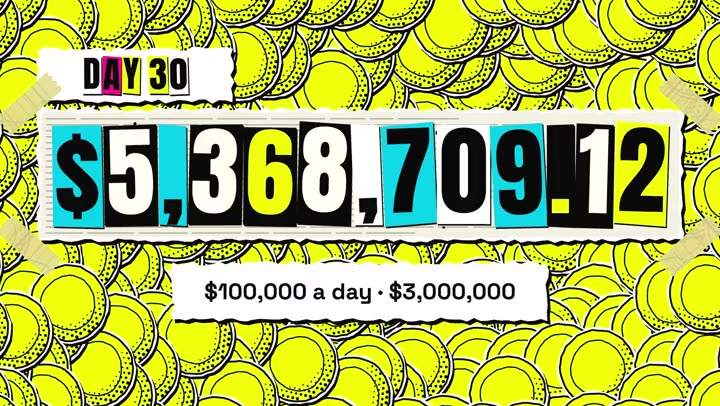
| A penny that doubles every day | collage-zine | 16:9 | 30 s | 2 | Music and voice-over |
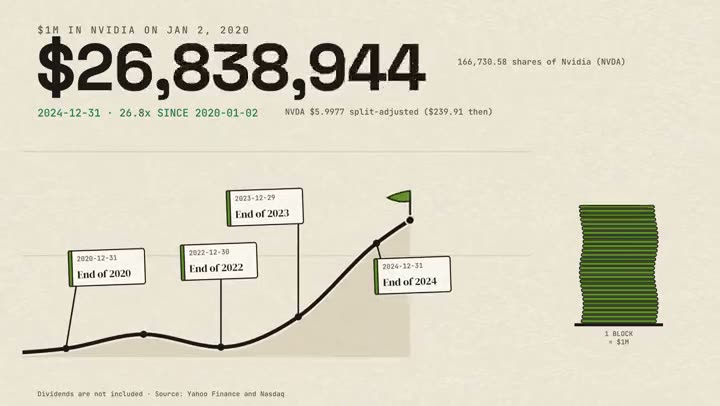
| $1M in NVIDIA: 2020 → today | chart-ascent | 16:9 | 30 s | 1 | Music, no voice-over |
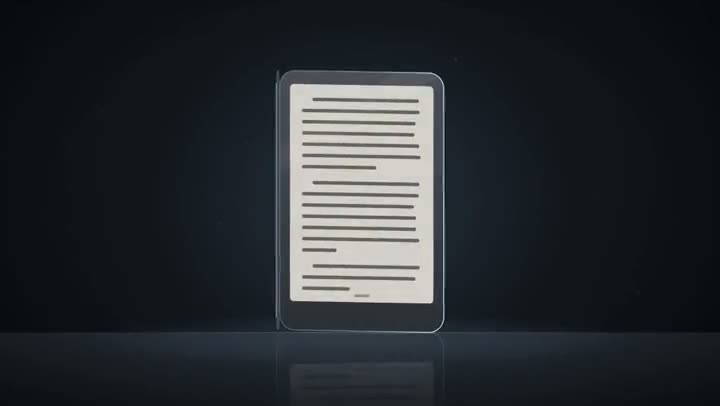
| Introducing Orrin One | dark-launch | 16:9 | 30 s | 1 | Music, no voice-over |
| One Sheet, One Crane | folded-beasts | 9:16 | 30 s | 2 | Music, no voice-over |
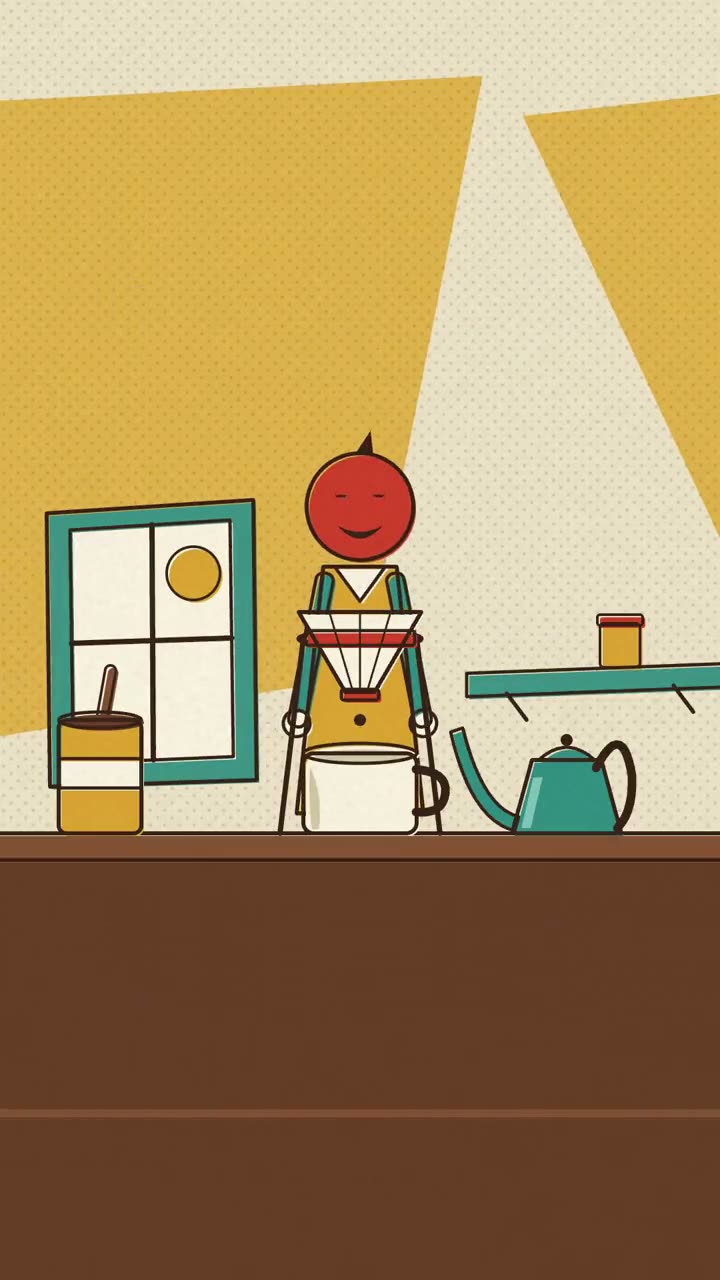
| Pour-over coffee in 5 steps | midcentury-flat | 9:16 | 30 s | 1 | Music, no voice-over |
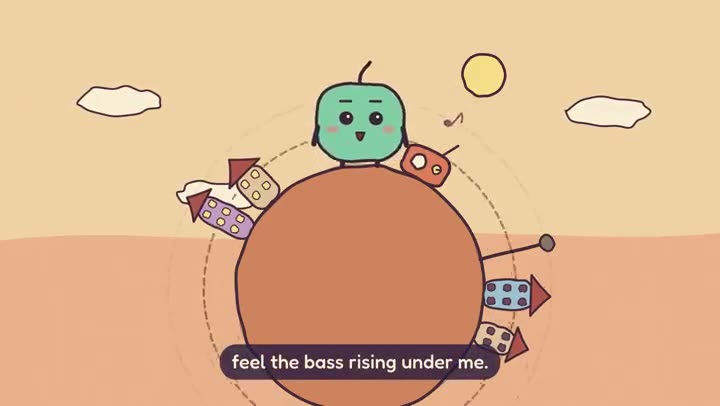
| Little Planet, Paper Stars | storybook-character | 16:9 | 45 s | 1 | The user's own song |
How the data-story requests were written
Four films are data stories in the AI motion video format, and their requests share a pattern. The compound interest request says "Use only the numbers below, copied exactly" and adds that the agent must not search for, add or estimate any other figure. It then lists every figure: $10,000 at 7% a year is $19,672 after 10 years, $38,697 after 20 and $76,123 after 30. The penny and twenty-questions requests do the same with their own numbers.
The requests also name the format and length up front (16:9, 30 seconds), say there are no photos, and describe the style by what is on screen: a crayon snowball rolling past three signposts, or torn-paper coins in a pile that grows on every page. Where there is a voice-over, the request gives the exact words in quotes and says the voice says "exactly this and nothing else". Where there is none, it says so. The NVIDIA request asked for music only and put the one caveat, that dividends are not included, in small corner text instead of the main frame.
One more habit is worth copying. Three of those requests mark the last shot as self-contained, so that it can be changed on its own later.
Changing one shot without redoing the rest
The three narrated films were edited after the first export, and the first edit in each asked for the last shot only. In the twenty-questions film, the first export came back with a flag from the automatic check: the wording "20 questions" and "one at a time: up to 1,000,000 questions" was not showing as specified in the last shot. The agent asked whether to fix it. The user instead asked for a different last shot, "30 questions" beside "one at a time: up to 1,000,000,000 questions", with "2 to the power of 30 is 1,073,741,824" under it. The agent saved version 2, said every other shot, the voice-over and the music were untouched, and exported again. It also said the check still named the old wording and did not recognise the new figures, because the fact list was fixed at the first version.
In the compound interest film the user first asked for the 5% comparison snowball to become 3% a year, labelled "3% a year · $24,273". A second edit asked for the comparison to be fully on screen by 26 seconds and to stay until the end. In the penny film the small scrap under the big number was changed to "$100,000 a day · $3,000,000". Here the first export had already been flagged: the labels "$0.01", "$5.12", "$5,242.88", "DAY 1" and "DAY 10" were not reading on screen. After the edit the agent repeated that those five labels were still missing and offered to fix them. The replay ends there and shows no fix.
Styles without numbers: a launch film, a paper crane, a coffee tutorial
The three non-data films show what the same flow does with other briefs. For the made-up pocket e-reader in "Introducing Orrin One", the request is long and concrete: the device at least 40% of the frame height, centred vertically, visible from the first frame, with the three facts set in the same very large type. The plan answered with a shot list and a list of what it would not do. The recording notes say this was the third recording; the first was too dark and too small and the second had a dead stretch and a faint closing card, and neither was published.
"One Sheet, One Crane" is a 9:16 mood film with at most four short subtitles and no facts. The agent's export carried two notes from the render check: the crane touches the right edge at 28.3 seconds, which the agent said was the crane leaving the frame as asked, and the table is bare in the last moment. The user then asked for the paper and crane to be about half the height of the screen and for calmer wood grain, and version 2 was exported.
"Pour-over coffee in 5 steps" is a 9:16 tutorial whose five steps and figures (15 g, 30 g, 240 g, about 3 minutes) came from the request, and the agent added none. The export check flagged an empty vertical band, about a third of the frame, in the final shot. The agent offered to fill it. The recording keeps version 1 only, and the notes say an earlier attempt had stopped at a storyboard the validator did not accept three times and made nothing.
Credits and time, as the replays show them
Only a few credit figures appear in the replays. The storyboard for the NVIDIA film came with an estimate of 1,840 to 2,960 credits for the whole video, with 2,177 as the expected figure, and said it is charged by what is actually used. The storyboard step itself shows 144 credits charged, the shot pass 445, and the final write 0. No total for the finished film appears.
"Little Planet, Paper Stars" is the music video. The user asked for a music video for a song of their own, and the agent said it needed the track, where it starts, a length of 10 to 45 seconds, the look and a format. The agent estimated that writing the video takes about ten minutes. Version 1 was saved with a recorded charge of 1,105 credits, started at the 33-second mark of the song, where the chorus begins, and ran 45 seconds in the storybook-character style. The export was 1920×1080 with the song as the sound and no burned-in lyrics.
What to check before you use the result
For an AI motion video, read the storyboard before you reply. It is the only point where nothing has been made, and the figures, labels and spoken lines in it are what the video will carry. Motion video is on paid plans, runs from 6 to 45 seconds in 9:16, 4:5, 1:1 or 16:9, and the names, prices and numbers you give are what the video is written to show.
Then read the agent's note after each export. In these replays the agent reported what the automatic check flagged, such as a missing label, an empty band, an edge touch or a mismatch with the original fact list, and left the choice with the user. Watch the preview for exactly those spots. If you change a figure after the first version, expect the check to compare against the old list, as it did for twenty questions and the penny film.
Last, open the MP4 with sound on and confirm every number against your source. The compound interest exports came out at about 111 MB each, which the notes with the film call too big for a phone.